How nicely some of those early statements about the alleged rape of an African-American exotic dancer by members of the Duke lacrosse team fit the racial paradigm we have constructed for our society.
Black community leaders and their liberal fellow travellers pushed all the buttons: mighty white Duke v workaday North Carolina Central; rich gown v poor town. The racist core asserts itself over the tolerant veneer. And then the clincher: had the men been black football players and the woman a white entertainer, they would be swinging from trees, compliments of your friendly local lynch mob.
This is, of course, pure nonsense. Forget the fact that there hasn't been a lynching in the south in more than 40 years. Forget that the great social, moral and political transformation known as the American civil rights movement was accomplished over its core 1955-70 period at a cost of fewer than 70 deaths. Forget the stunning change in US politics from a lethargic four-party system (liberal Democrats, southern Democrats, liberal and conservative Republicans) to the current dynamic two-party system (Liberal Democrats versus conservative Republicans.)
Forget all that. But don't pretend to forget how black collegiate athletes are coddled in this country; how their "indiscretions" with white coeds are handled administratively, often with the intervention of a helpful white coach, faster than you can say Tom Osborne.
And those are situations where the athlete in question actually misbehaved. If black collegiate athletes today were indicted on rape charges on grounds as flimsy as those facing the white Duke lacrosse players, the civil rights community - aided and abetted by the national media - would by now have turned the case into a litmus test of racial equity. The men would have been likened to the Scottsboro boys of Depression-era Alabama; to Emmet Till, who whistled at a white woman in Mississippi and paid for it with his life; or to Schwerner, Goodman and Chaney, who became martyrs of the civil rights movement, also in Mississippi.
Monday, July 03, 2006
Duke Rape Case View From the UK
excerpt:


The Details of the Swift Program that the Terrorists Would Not Have Known
From David Frum's Diary:
This latest defense sounds to my ears rather like excusing the publication of the departure time of a troopship with the excuse: Well, everybody knew that the US was moving troops by water. There's a big difference between knowledge of the general outline of a program and knowledge of its specific operational details. Here are some details from the June 23 story that you have to wonder whether the terrorists knew before:
i) The US and its allies are tracking not only bank accounts, but also information from stock exchanges and mutual fund managers.
ii) The US does not however have easy access to individual ATM transactions on American soil.
iii) Wire transfer information is not available in real time, but only after a lag of several weeks.
iv) Nor is it logistically possible to get real-time information on credit-card purchases - of, for example, fertilizer or timing devices.
v) The United Arab Emirates fully cooperates with the program.
vi) Individual member banks are growing unhappy with the program and want it to end.
Doesn't that strike you as potentially useful information - especially points iii and vi?
The Times should have the courage of its convictions. Instead of pretending that the information revealed was useless, it should forthrightly admit: Yes we may possibly have helped the terrorists - but we believe that any risks to security were more than worth it. Then we could argue that latter point. Their current line of defense is disingenuous and cowardly.
Sunday, July 02, 2006
The Washington Post Recycles Enemy Propaganda
From Newsbusters:
Read the whole thing.
To be fair, not everything that is reported by our enemies is a lie. But this is a propaganda war. Every bombing, every beheading, every IED attack and every atrocity claim is part of a propaganda effort. The terrorists cannot face them American forces in open battle, or even in ambush. But they can use casualties, deaths, destruction and atrocity stories to wear down our will and paint our fighting forces as evildoers. Like the war in Viet Nam, the battlefield is the will of the American people.
That is why a press that is on America’s side would not reprint – word for word – an atrocity story by the enemy; not without full confirmation by American forces and only to report the facts.
But the press is not on America’s side. If the media had the same monopoly on information that it had in the 1960s, we would have been surrendered in Iraq by now, hightailing it to “redeployment” zones in Okinawa, 4000 miles away.
But thanks to the Internet, the media monopoly on information has been broken. Today it is the NY Times and LA Times that are on the defensive for publishing America’s secrets. Today, it’s Dan Rather who has been “redeployed” to a retirement home.
Getting back to the Post’s sources, the writer gives an example of a previous report of another “atrocity” again involving rape (a common theme among the followers of the Religion of Peace):
Does the Media Use al-Qaeda & Iraqi Insurgency Organizations for Reports?
Posted by Robin Boyd on July 2, 2006 - 15:16.
There have been many complaints about how our media reports the stories from Iraq. Countless articles have been written about the selective nature of reports from the field – focusing on the negative and completely ignoring the positive. Documents uncovered in Iraq have demonstrated how the insurgents use the American media for propaganda dissemination.
Now I have uncovered something even more shocking and disgusting. Our media is using pro al-Qaeda, pro Iraqi insurgency organizations as the basis for their reports – more importantly as sources of information that is damning to our soldiers.
While researching the claims of US soldiers raping a young Iraqi woman and then killing her and her family, I came across an article from Mafkarat al-Islam via Free Arab Voice. The article cites eyewitness testimony about the US rape and murder of the Iraqi family. According to Free Arab Voice, the report was filed on Saturday night at 11:55 Makkah time.
Today’s Washington Post posted an article by Ellen Knickmeyer. The article’s headline purported the subject of the article as the Baghdad market bombing but the text of the article was almost exclusively devoted to the rape and murder allegations. At the bottom of the article, the Washington Post cited “Two Washington Post special correspondents in Mahmudiyah contributed to this report.” The article cites a Saturday interview with two eyewitnesses to the attack.
Read the whole thing.
To be fair, not everything that is reported by our enemies is a lie. But this is a propaganda war. Every bombing, every beheading, every IED attack and every atrocity claim is part of a propaganda effort. The terrorists cannot face them American forces in open battle, or even in ambush. But they can use casualties, deaths, destruction and atrocity stories to wear down our will and paint our fighting forces as evildoers. Like the war in Viet Nam, the battlefield is the will of the American people.
That is why a press that is on America’s side would not reprint – word for word – an atrocity story by the enemy; not without full confirmation by American forces and only to report the facts.
But the press is not on America’s side. If the media had the same monopoly on information that it had in the 1960s, we would have been surrendered in Iraq by now, hightailing it to “redeployment” zones in Okinawa, 4000 miles away.
But thanks to the Internet, the media monopoly on information has been broken. Today it is the NY Times and LA Times that are on the defensive for publishing America’s secrets. Today, it’s Dan Rather who has been “redeployed” to a retirement home.
Getting back to the Post’s sources, the writer gives an example of a previous report of another “atrocity” again involving rape (a common theme among the followers of the Religion of Peace):
“On December 19, 2004, Abu Nasr claimed an attack against Abu Ghraib prison was sparked by a letter from a female inmate named Fatima. In the letter, which seems undoubtedly to be a fabrication, Fatima claims to have been raped repeatedly, along with 13 other girls.
The charges in the letter are totally groundless and Fatima herself appears to have never existed. Only six females were held temporarily at Abu Ghraib prison at various times from July to mid-December 2004, two of them for treatment in the medical facility. None of them were held for more than 10 days and none were sexually assaulted.
Despite the fact that the claims in “Fatima’s letter” are baseless, the sensationalistic, outrageous nature of the charges ensured that the letter was widely reposted on Internet sites and circulated by email. Jihad Unspun posted in on December 24, 2004.”
SWIFT: Secret or Well Known. Will the Left Make Up Its Mind!
From Patterico's Pontifications:
Here’s Richard Clarke and Roger Cressey in the New York Times:
Privacy rights advocates, with whom we generally agree, have lumped this bank-monitoring program with the alleged National Security Agency wiretapping of calls in which at least one party is within the United States as examples of our government violating civil liberties in the name of counterterrorism. The two programs are actually very different. Any domestic electronic surveillance without a court order, no matter how useful, is clearly illegal. Monitoring international bank transfers, especially with the knowledge of the bank consortium that owns the network, is legal and unobjectionable. … These initiatives, combined with treaties and international agreements, should leave no one with any presumption of privacy when moving money electronically between countries.
....
I am just fascinated that the Times thought running this piece was a good idea. Because it amounts to a repudiation of some the fundamental premises of James Risen and Eric Lichtblau’s original reporting.
Remember, this was supposedly a “secret” program. Hush-hush, nobody knows, classified—hence the title of R&L’s piece “Bank Data Secretly Reviewed by U.S. to Fight Terror”. They also have a caption to a picture there that says “Data provided by the program helped identify Uzair Paracha, a Brooklyn man who was convicted on terrorism-related charges in 2005, officials said.” But don’t pay attention to that right now. We’re arguing in the alternative.
See, the point of Risen and Lichtblau’s “bombshell” here is that this is a clandestine program and a closely-guarded secret. That’s why they say things like how the program “stirred concerns inside the administration about legal and privacy issues.” But of course that’s absurd. Everyone knows, according to Richard Clarke, that international transfers are monitored, and has for a long time.
Likewise, when Risen and Lichtblau report that “Officials described the Swift program as the biggest and most far-reaching of several secret efforts to trace terrorist financing,” that’s kind of, well, a lie because it was never secret at all. Everybody knew about it, right? Or when “Swift executives have been uneasy at times about their secret role,” they’re just being paranoid because everyone knows international wire transfers are, as my law-talkin’ friends might put it, “pervasively regulated” and therefore their role isn’t secret at all.
Or a little later, when they say that “While the banking program is a closely held secret, administration officials have conducted classified briefings” to Congress, they really mean that “the program is wide open, that everybody pretty much knows about it, like Valerie Plame being a spy.” Or when they point out that
In terrorism prosecutions, intelligence officials have been careful to “sanitize,” or hide the origins of evidence collected through the program to keep it secret…
…one wonders why they even bother. Because everyone knew about this all along. Why, it was mentioned in a UN Report in 2002, right? And we know that Al-Qaeda’s research division spends its time reading through every exciting financial document that the U.N. churns out.
And I’m puzzled by this line: “By 2003, the cooperative’s officials were discussing pulling out because of their concerns about legal and financial risks if the program were revealed, one government official said.”
What’s the problem? Why could they possibly worry if this non-secret, well-known program came out that just reported information everybody knew was public knowledge anyway came out? Everyone would just say, well, of course we all knew that, so what’s the big deal, Lucille?
And indeed that’s the strange thing about Richard Clarke’s op-ed appearing in the Times. As Patterico already noted, the Timeses are aware they’ve shot themselves in the foot with their disclosure. Now Richard Clarke is downplaying both the significance and the secrecy of their findings. Strange, huh? A paper that has won Pulitzers for its past exposures of American military and intelligence secrets, suddenly eager to publish someone saying, “Oh, this? It’s no big deal. Really. Wasn’t that big a secret. Hell, my grandmother knows SWIFT monitors international terror-linked financial transactions and shares the information with the CIA!”
In fact, if Clarke and Cressley are right about this, Lichtblau and Risen grossly exaggerated how secret the program really was.
Now personally, I think Clarke is a pretty smart guy, but he’s wrong. I think this was an extremely effective terrorist fighting tool, one that captured some very, very bad guys who obviously didn’t think they’d get caught when they wired money around the globe. Even if they suspected a transaction might be monitored, they occasionally chose to risk a transfer now and then because they thought they could get away with it. I think the program was effective precisely because it was secret, and the Timeses went and ruined it in a fit of self-absorbed hubris that aids our enemies and makes Americans less safe.
But how will they respond to Clarke and Cressley? The New York Times can’t have its cake and eat it, too. Will Keller, Times, and Lichtblau continue to insist that the program was both effective and secret, and the story was a major Pulitzer-worthy scoop? Or will they continue backpedaling?
If they want to try to weasel out of this, let’s see it right there on the corrections page: “Importance and Secrecy of SWIFT Monitoring Program Greatly Exaggerated”. We might not believe them, but if they want to back away from the story, they should go all out. Otherwise the notion that they have traitorously decided (again) to help the terrorists by revealing a successful and legal program will persist, and it will continue to gather strength.


Mark Steyn: Court finds a right to jihad in the Constitution
The incomparable Mark Steyn on the Geneva Convention:
...
and on the Supremes:
Sometimes it helps to laugh because it hurts too much to cry.
There are several ways to fight a war. On the one hand, you can put on a uniform, climb into a tank, rumble across a field and fire on the other fellows' tank. On the other, you can find a 12-year-old girl, persuade her to try on your new suicide-bomber belt and send her waddling off into the nearest pizza parlor.
The Geneva Conventions were designed to encourage the former and discourage the latter. The thinking behind them was that, if one had to have wars, it's best if they're fought by soldiers and armies. In return for having a rank and serial number and dressing the part, you'll be treated as a lawful combatant should you fall into the hands of the other side. There'll always be a bit of skulking around in street garb among civilian populations, but the idea was to ensure that it would not be rewarded --that there would, in fact, be a downside for going that route.
...
and on the Supremes:
The U.S. Supreme Court has now blown a hole in the animating principle behind the Geneva Conventions by choosing to elevate an enemy that disdains the laws of war in order to facilitate the bombing of civilian targets and the beheading of individuals. The argument made by Justice John Paul Stevens is an Alice-In-Jihadland ruling that stands the Conventions on their head in order to give words the precise opposite of their plain meaning and intent. The same kind of inspired jurisprudence conjuring trick that detected in the emanations of the penumbra how the Framers of the U..S Constitution cannily anticipated a need for partial-birth abortion and gay marriage has now effectively found a right to jihad -- or, if you're a female suicide bomber about to board an Israeli bus, a woman's right to Jews.
Sometimes it helps to laugh because it hurts too much to cry.
The Left has MS
Did you ever have an elderly relative who kept telling you about the way it was when he was a boy? He had it tough, walked ten miles to school every day, uphill, barefoot, in a blinding blizzard. The Left is like that, caught in a time warp. At the drop of a hat (or at a graduation) he will natter on about the heady days of the 1960s, when the Evil Empire (that’s the US for the Lefties) was brought to its knees.
I had a friend who died recently of MS. One of the effects of this disease, in its later stages, is on memory. Short term memory goes while long term memories keep coming back. The Left is afflicted with a version of MS, incapable of remembering the recent past; it casts its mind back to the long ago.
Wretchard, at the Belmont Club, summarized their state when he said:
I had a friend who died recently of MS. One of the effects of this disease, in its later stages, is on memory. Short term memory goes while long term memories keep coming back. The Left is afflicted with a version of MS, incapable of remembering the recent past; it casts its mind back to the long ago.
Wretchard, at the Belmont Club, summarized their state when he said:
The really interesting thing about reading the Jihadis is how they seem far more intelligent, strategically savvy and determined than the Left. The days of Lenin and Trotsky are long over. Today's poor relicts can't see beyond gender issues, global warming and sexual politics. If the end of the West comes, its last conscious thoughts will not be of defiance but of genuine and pathetic surprise.
Saturday, July 01, 2006
Human Rights Atrocities: The Consequences of United Nations Gun Confiscation in East Africa
"Human Rights Atrocities: The Consequences of United Nations Gun Confiscation in East Africa"
That's the subject of a new Issue Backgrounder just published by the Independence Institute, co-authored by Paul Gallant, Joanne Eisen, and me. The monograph details how U.N.-backed gun confiscation programs in Kenya and Uganda have led to murder, torture, and arson, and have turned tens of thousands of pastoral tribespeople into starving refugees. The paper is available in PDF and in HTML.
That's the subject of a new Issue Backgrounder just published by the Independence Institute, co-authored by Paul Gallant, Joanne Eisen, and me. The monograph details how U.N.-backed gun confiscation programs in Kenya and Uganda have led to murder, torture, and arson, and have turned tens of thousands of pastoral tribespeople into starving refugees. The paper is available in PDF and in HTML.
When Geography 'Equals' Bigotry
It seems one of the verities of life for 'progressives' is that if you are not one, you must be a 'bigot' of some kind.
A few weeks ago, we pointed out a ridiculous column by Garrison Keillor, where he opined that the Repubs' decision to make an issue of House Minority Leader Nancy Pelosi in the 2006 mid-term elections was really veiled homophobia because she represents San Francisco.
Read the whole thing...
Mommy, why does the NY Times tell the terrorists how we are tracking their financial transactions?

I liked the truthiness of this
Posturing Over Amnesty
Charles Krauthammer reminds us that we have always given amnesty to foes we have defeated. How much more important and better is it to give amnesty to those who have not yet been defeated but who offer to lay down their arms?
For better or worse, we chose occupation lite. The insurgency continues, and it is not going to be defeated militarily. [I'm not so sure about that] But that does not mean we lose. Insurgencies can be undone by co-optation. And that is precisely the strategy of Prime Minister Nouri al-Maliki. Given that his life is literally on the line in making such judgments, one should give his view some weight.
He intends to wean away elements of the insurgency by giving them a stake in the new Iraqi order. These Sunni elements -- unreconciled tribal leaders and guerrilla factions -- may well decide that with neither side having very good prospects of complete victory, accepting a place and some power in the new Iraq is a better alternative than perpetual war.
The Bush administration is firmly behind this policy. And who is sniping at it from the sidelines? Democratic senators, fresh from having voted for troop withdrawal rather than victory as our objective in Iraq, led the charge to denounce any sort of amnesty for insurgents who had killed Americans.
Apart from the hypocrisy, there is the bizarre logic: Is the best way to honor the sacrifice of those who have died in Iraq to decree an impotent, completely hypothetical policy of retribution? (Who, after all, is going to bell the cat?) Or is it to create conditions for precisely the kind of Iraq -- self-governing and internally reconciled -- that these courageous soldiers were fighting for?
Our objective in any war is not revenge but success. Confederate soldiers who swore allegiance to the U.S. were pardoned after the Civil War, even those who had killed Union soldiers. We gave amnesty to legions of Japanese and Germans who'd killed thousands of Americans in World War II.
On Titties and Terrorists
I know this post will offend some people, but the author makes some good points. From the House of Eratosthenes.
....
Click on the link to read the whole thing
"It" is a pair of things, actually. Here at The Blog That Nobody Reads, we like to critique the prevailing viewpoint, that all-important Conventional Wisdom. We blossom forward with unsolicited opinions, when that Conventional Wisdom is most opprobrius to old-fashioned common sense. And the pair of things that "It" is, would be the two subjects that repeatedly inspire comments, design to influence the unspoken orthodoxy, that are...well, let's just call them what they are. Bull squeeze. Moose feces. Wombat-rabites bollywonkers crazy codswallop.
Where these two subjects rise up, it seems the more impressive the office held by the person speaking out about them, the more nonsensical is the crap coming out of that person's mouth. People say stuff with regard to these subjects that, if life & limb were depending on the verity of the stuff they're saying, they'd stop in mid-sentence and then start mentally spanking themselves for the foolishness of the comments they're passing through their voice boxes, or placing in ink over their signatures.
The two subjects are terrorist attacks, and young ladies who aren't wearing very much clothing.
I've commented before on my complete lack of success trying to figure out what these two subjects have to do with each other. I still don't understand what the common ground is. But there must be some.
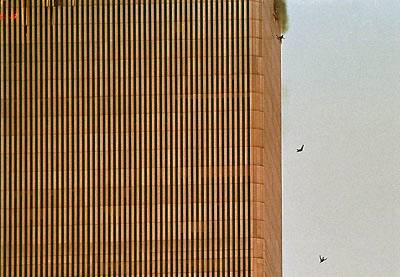
We have people in positions of power, prestige, and public trust, who say people in our executive branch should be blamed for -- hurricanes! Yes! And yet, when evil men conspire for years at a time, taking lessons in how to fly a plane but not to land it, go to one last stripper show on September 10, say their prayers, bathe in their martyr's cologne, do their holy fasting, rent cars, catch planes, slash the flight attendants' throats with box-cutters, hijack the plane, say some more prayers, and then with a hearty "Allah Ackbar!" steer the aircraft into buildings...this whole event is something that happened. You can't describe the event while mentioning the word "Islam" or "Muslim," not unless you're talking about hate crimes unfairly perpetuated in the wake of the event...or pontificating with dread about how some of our airport security people may be thinking about some racial profiling. Oh, no, never speak about those who did something that was done. You only speak of our (Republican) President, and the cause-and-effect influence he may have had on the freakin' weather.
Yes, acts of God are blamed on men, and acts of men are blamed on...well, these speakers won't say what. Oopsie, look what "happened." It "happened." What "happened on September 11, 2001." It's gotten bad. It's gotten to the point where I'm harboring some real misgivings against that H-word. Nobody did it, per se. It "happened."
....
All of these cognitions, sentiments and proclamations are fecal in nature. They are worth nothing, save for fertilizing qualities. No one in their right mind, would actually consume them, since they're simply a waste product from something else. You wouldn't bet your own life, limb, treasure, or esteem on the idea that the September 11 attacks simply "happened," or that when a cheerleading squad including girls as young as 6 or 7 years old is required to cover up their bellies with some fabric, the prohibition against bare midriffs has nothing to do with proper dress for 6-year-old girls, and is intended to prevent "eating disorders." These ideas are all absurd. They are articulated, by people who hold positions of high honor and trust, with the expectation that the comments will be remembered among a narrow, fanatical audience that happens to like them, and soon be forgotten by everyone else. To the public at large, you can expose what's ludicrous about these statements, simply by repeating them two or three times. They are not constructed for the purpose of being inspected critically. They are constructed with the explicit expectation that the subject must be changed, irreversibly, entirely, before the last syllable of the statement has echoed off the farthest wall.
Click on the link to read the whole thing
What the Fed Really Said
For those interested in the vagaries of the market and the influence that the Federal Reserve has on the economy and the markets, John Mauldin has some analysis and prognostications:
Note: From Frontline Weekly Newsletter by John Mauldin. (John@FrontLineThoughts.com)
Thursday saw a powerful response by the markets in stocks, bonds, commodities, and currencies to the communiqué from the Fed after its recent two-day meetings. Clearly, some were interpreting the communiqué to mean that the Fed had finally come to an end of its interest-rate-hiking ways. The immediate spin was quite "dovish" in terms of future rate hikes and concern about inflation.
That has become a pattern in the last year. The Fed releases its minutes, the immediate spin is that we are ready for a "pause," and the market rallies. Then we start to listen to the speeches from Bernanke and various Fed governors and are shocked - shocked, I tell you - that nothing has really changed and they intend to keep on raising rates in a measured manner.
....
Now, one can read the statement to make a case for a pause in September. There will be two more inflation numbers before the September meeting. If the economy is slowing down and inflation is coming down, both of which are possible, then the Fed may indeed pause. But let's think about that.
A slowing economy is not going to be good for profits, and thus not good for the stock market. But if the economy continues to rip and roar along with inflation at an elevated level, then the Fed is going to continue to raise rates. There are now some maverick calls that the Fed rate will be at 6% by the end of the year. If you are bullish on the economy, then that is a perfectly rational expectation.
But if rates continue to increase, then that is ultimately not going to be good for mortgage rates and the housing market. That will also impact consumer spending. That outcome is not good for the stock market either.
.....
I think it is highly likely the Fed will keep raising rates until we get either a slowdown or a recession. The irony is that the quicker the slowdown comes into view, the less severe it is likely to be. Why?
If the economy starts to weaken in the third quarter, with inflation coming back down, the Fed will stop raising rates. Given where we are today, it is likely we get a simple mid-cycle slowdown, just like we did in the mid-'80s and mid-'90s, and then the growth cycle continues.
But if the economy stays strong and inflation pressures do not abate, the Fed will raise rates higher and higher, which will ultimately put more pressure on the housing market and consumer spending. The risk is they go a raise (or three) too far and the economy falls rather swiftly into a real slowdown and/or a recession.
So, later in the summer, we are likely to be in the perverse situation where good news is bad for the markets and bad news is merely less bad.
.....
There are any number of headwinds to the economy, as Shilling and others (including your humble analyst) have noted. Among these:
1. High energy prices serve as a tax
2. Central banks everywhere tightening
3. A slowing housing market
Sooner or later, I think they will take their toll. The growth in consumer spending in recent years has been driven by rising home prices and the ability of US consumers to have access to cash-out financing. Higher mortgage rates are going to limit the growth in home prices and the ability of consumers to borrow, as well as drain more cash from disposable income. With wages barely rising in line with inflation, and not keeping up with the inflation of daily living, I think the potential for a consumer-led slowdown or recession is significant if the Fed keeps raising rates beyond August, and maybe/probably even if they do pause in September. That will not be good for the markets.
As my friend Matt Blackman noted recently, the trend is for the market to bottom in the third year of the presidential cycle. That would all fit if there is a recession and the inevitable recovery in 2007. I continue to suggest that readers look at absolute-return types of investments and be very careful of long-only stock market investments. The time will come when it will be safe to get back in the water. But in my opinion, that is not today.
Note: From Frontline Weekly Newsletter by John Mauldin. (John@FrontLineThoughts.com)
RATHER BLAMES ROVE IN ROCKET-SKATE MISHAP
Iowahawk reports:
Read the whole thing, (but don't be drinking anything or you'll mess up your computer):
NEW YORK - Veteran anchorman Dan Rather implicated White House Political Director Karl Rove as "the mastermind behind the so-called Acme Group" after his rocket-powered roller skates exploded during a Wednesday CBS Evening News investigative report.
Rather had donned the controversial Acme skates -- along with an Acme brand Bat-Man suit -- in a complicated sting operation to reveal what he termed a "deep conspiracy between the White House and internet partisans to cover up George Bush's shameful military records."
The investigation went awry soon after Rather lit the skates, releasing what NYU Physics professor Alan Sokol estimated as "20,000 to 30,000 pounds of thrust." The heat of the initial explosion was so intense that it singed the hair off several nearby CBS reporters, including Rather's anchor heir-apparent John Roberts.
The blast sent Rather hurtling along 53rd Street toward the Hudson River at speeds estimated upwards of 200 miles per hour, scarcely slowing as the runaway skates drug the helpless journalist over, under and through stalled rush hour traffic.
Read the whole thing, (but don't be drinking anything or you'll mess up your computer):
Friday, June 30, 2006
Wisconsin's Ward Churchill? UW-Madison lecturer on Islam is leading 9/11 conspiracy theorist who thinks the U.S. government blew up the Trade Center a
This is what passes for scholarship at U of Wisconsin
Click on the link and keep scrolling, this story is fascinating.
UPDATE: for those of you new to The Virginian, please look around. I'm interested in the reason this old story is getting attention. Feel free to leave comments.
Remember how upset we all got about Churchill, who was just a prof from another state who was in town for one lousy speech? Wait until you hear about Barrett, who is teaching a large Introductory to Islam class to UW-Madison undergrads this fall. (He estimates it will have about 200 students).
Barrett, who started a national group on 9/11 conspiracy theories, doesn't believe the terrorists caused the World Trade Center attacks. He thinks the government used a controlled demolition to do it (with Dick Cheney the likely mastermind) and he thinks that Mohammad Atta was probably a government pawn and patsy. He thinks that al-Qaida as we know it is a myth fabricated by the government (or at the very least a US government front group and he calls it al-CIA-duh to underscore his point). He also believes that many of the 9/11 hijackers are alive and that the 9/11 terrorist attacks have nothing to do with Islam. He compares those who believe the terrorists caused 9/11 to the "good Germans" who bought into Nazi ideology and says we're a bunch of stupid racists for believing the "Big Lie" that the terrorists, not the government, caused 9/11. He thinks the war on Terror and 9/11 are both "Orwellian hoaxes." He refuses to say that bin Laden is evil.
In a presumably tongue in cheek letter to the Secret Service after he says a fellow 9/11 conspiracy theorist had weapons confiscated by them after predicting Bush would be shot for treason, Barrett predicts that a majority of Americans will soon eagerly anticipate Bush's execution for the mass murder of Americans on 9/11 (read the whole letter at the end of this posting). It also discusses Bush being gassed, hung, and electrocuted.
I repeat. This guy is teaching Introduction to Islam at UW-Madison this fall.
Click on the link and keep scrolling, this story is fascinating.
UPDATE: for those of you new to The Virginian, please look around. I'm interested in the reason this old story is getting attention. Feel free to leave comments.
Vietnam Vets for the Truth
From FreeRepublic.com:
Welcome! My name is Larry Bailey, and I am a retired Navy SEAL Captain. I was in Vietnam in 1967 and participated in the Dominican Republic invasion in 1965. I also commanded the SEAL school in Coronado, CA.
I am the President of an organization named Vietnam Vets for the Truth, LLC. Please note the similarity in names with a group much in the news, Swift Boat Veterans for Truth; I wish to emphasize that we are completely different and separate groups that were organized independent of one another. We do, however, support them completely.
We are an incorporated 527 PAC composed of Vietnam veterans opposed to John Kerry.
We will hold a rally we call “Kerry Lied . . . While Good Men Died” on Sunday, September 12, at 2 PM just north of the US Capitol building in the Upper Senate Park. Ten speakers will tell some of the true stories about the virtues of Vietnam veterans and contrast them with the lies told by John Kerry. We will identify those speakers in a few moments.
Much has been said by the news media about the Swiftees being a front for the Bush campaign. We know those guys, and we know that is not true. More importantly from our perspective, we have no connection whatever to the Bush administration or the Bush campaign. In fact, we never even TALK to anyone connected with either the Republican Party or the Bush/Cheny campaign. And regarding fundraising, the most any single donor has contributed is $1000.00, while the least is $2.50. We have raised about just a bit over $70,000, with the average contribution being just under $100.00.
I know this is hard for many reporters to understand or believe, but this is not a matter of politics. We would be doing this same thing if John Kerry were a Republican. And as much as we respect the office of the Presidency, if the President himself called and asked us to cease and desist, we could not do so. This is a matter of honor--a matter of Kerry’s betrayal, a matter of concern for our country. And it is also deeply personal.
The Swiftee officers knew Kerry in Vietnam; they ate with him, slept in the same quarters with him, and watched him on patrol. We will leave to them the comments about his actions in Vietnam, because they observed him there; we did not. Our quarrel with John Kerry is based solely on his actions when he returned from Vietnam. I want to summarize two of those things for you very briefly.
NUMBER 1 - John Kerry joined—no, he FORMED—VVAW, part of the radical left wing of the anti-war movement, and the things he said and did make him responsible, more than any other individual, for the false image of Vietnam veterans as babykillers or violent misfits prone to drug abuse.
John Kerry told the Senate Foreign Relations Committee in 1971; he told America and the world; and most despicably, he told our wives, our parents, and our children that we were rapists, torturers and murderers. And he told other outrageous lies, as well.
He said America’s actions in Vietnam were criminal.
He said most troops in Vietnam were on drugs.
He said the Vietnamese people didn’t care whether their government was democratic or Communist.
He said America “murdered” over 200,000 Vietnamese every year.
He said he was ashamed of his service, which must have been a lie, because he now says he is proud of it.
These and other things Kerry said were a smear on the laudable service of a generation of young Americans in Vietnam. We have carried the stain of his lies for decades, but the smear on our dead brothers, whose names are carved on a black granite wall, is far worse.
NUMBER 2 - The insult to us and to our dead comrades is not the worst part of John Kerry’s action. The worst part is that he gave aid and comfort to our enemy while America’s sons were still dying. All the false things he said about us encouraged our enemy to be patient, even when their losses were devastating. We believe there are thousands of names on that black granite wall because of John Kerry and others like him.
Kerry went to Paris in 1970 to meet with our enemy’s representative, Madame Nguyen Thi Binh, in violation of US law, while hostilities were ongoing and while he was still a commissioned officer in the US Naval Reserve. Kerry returned to the US and publicly advocated the enemy’s position and decried our own.
Our POWs heard the words of John Kerry from their interrogators as they were pressured and threatened to confess to committing non-existent war crimes.
This is a story of betrayal. John Kerry betrayed us, he betrayed his country, and, because of his status as a Naval officer, we believe his betrayal was far worse than Jane Fonda’s.
But we have never forgiven, we have never forgotten, and America needs to face these facts before the November election.
My fellow Vietnam veteran, Terry Garlock, who first proposed the idea of the “Kerry Lied” Rally, will now share his observations. He will be followed by another “winner” of the Purple Heart, Attorney Dexter Lehtinen of Miami and by VVT’s volunteer Media Affairs Director, Jeff Epstein, who is NOT a veteran. But I’ll let him address that issue.
The Hamdan Abomination
From National Review:
The Supreme Court’s decision to impose by judicial fiat a treaty that no politically accountable official would dare propose — a one-sided compact wherein the United States gives elevated due process to al Qaeda’s terrorists while they continue slaughtering civilians and torturing their captives to death — is an abomination.
To begin with, the Court had no business deciding this case at all. Not only did it target the president’s commander-in-chief authority to determine what is militarily necessary in wartime, it also imperiously slapped down the U.S. Congress. In last December’s Detainee Treatment Act (DTA), Congress — acting on its constitutional prerogative — rescinded the unprecedented jurisdiction that the Supreme Court, in the 2004 Rasul case, had tried claimed over alien enemy combatants captured in wartime and held outside the U.S. (that is, outside the jurisdiction of U.S. courts). This Court, however, acknowledges no limits on its powers — whether imposed by Congress or by the English language, which it had to torture in order to construe the DTA’s unambiguous limitation of its jurisdiction as an invitation to meddle.
And meddle it did. It rewrote legislation that clearly authorized the military commissions for captured terrorists that President Bush ordered in late 2001. It rewrote the Geneva Conventions. And it claimed for itself the mantle of final authority over both international relations and military necessity — matters in which it is wholly lacking institutional competence and which the Framers committed singularly to the chief executive.
The result was somehow to find that the military commissions are unauthorized under federal law and unfair under international law. Never mind that they guaranteed our enemies the rights to counsel, to the presumption of innocence, to proof beyond a reasonable doubt before conviction, to the privilege against self-incrimination, to confront the government’s witnesses and summon witnesses in their defense, and to prepare a defense with broad discovery of the government’s evidence and investigative file.
How could this conceivably be insufficient due process for alien combatants with no legitimate claim on Bill of Rights? The Court fretted that the procedures might not permit captives like Salim Ahmed Hamdan — the driver and bodyguard of Osama bin Laden — to be present at every stage of their trials. This is perhaps the most deplorable of the excesses endorsed in Justice John Paul Stevens’s majority opinion (joined by Anthony Kennedy, David Souter, Ruth Bader Ginsburg, and Stephen Breyer). First, the concern is sheer speculation. There hasn’t been a commission trial yet, and there is no way to know whether Hamdan would have been excluded from any part of a trial, much less whether the degree of exclusion would have been unjustifiable. Second, the rules allow for the combatant’s military lawyer to be present even when he is not. But third, and most fundamentally, safeguarding national security is the highest obligation of government. The commissions wouldn’t have guaranteed Hamdan’s right to be present at every stage of the trial in order to preserve the government’s ability to conceal from the enemy, during wartime, our national-security secrets, as well as our methods of obtaining them. Protecting Americans from attack depends on that ability. But five justices of the Supreme Court, completely unaccountable to the Americans whom the government is obliged to protect, have subordinated that obligation to the hypothetical interests of enemy operatives who have no judicially enforceable rights under American law.
In deciding as it did, the Court also ignored its own venerable precedent — of over a half-century’s standing — that the Geneva Conventions, even when they do create binding obligations on governments, do not create judicially enforceable rights for individuals. Disputes over their application are, rather, to be worked out diplomatically, among the political representatives of sovereigns. Moreover, the Geneva Conventions were irrelevant to Hamdan’s case. He is a terrorist combatant who fails to meet the conventions’ definition of a prisoner of war; consequently, he is not entitled to the conventions’ POW protections. In order to get around this inconvenient fact, the Court had to invoke (and distort) “Common Article 3” of the conventions, which applies only to civil wars taking place within the territory of a single country, as opposed to international conflicts. The Court argued, absurdly, that because al Qaeda is not a nation, it cannot be in an international conflict: so the global War on Terror is not “international,” despite having been fought in the United States, Somalia, Yemen, Kenya, Tanzania, Afghanistan, and Iraq. As for Article 3’s requirement that the conflicts to which it applies be confined to a single country, the Court’s majority found an easy way to get around it: by ignoring it.
Hard as it may be to believe that the Court, without any grounding in either American law or the Geneva Conventions, has effectively signed a treaty with al Qaeda for the protection of its terrorists, there may be a silver lining. The case implicates only trials of enemy combatants, whom the president remains authorized to detain until the end of hostilities — however long that takes. In addition, the Court held that military commissions would be permissible if Congress authorized their precise terms and procedures. Sens. Lindsay Graham and John Kyl, who were the engines behind the Detainee Treatment Act that the Court cashiered, have already indicated they are ready to get to work on this. Arlen Specter also has a proposal. There is no issue more important than national security, and with the 2006 elections beckoning it is essential that Republicans move quickly on legislation. Our elected representatives need to be on record, now, about what rights they would give to Qaeda terrorists in wartime.
As yesterday’s decision again demonstrates, this Court would rather impose its preferences on us than simply follow the law. We should find this unacceptable in any case. But when the consequences of the Court’s arrogance rise to the level of life and death, there is only one word to describe what it is: an outrage.
Hamden's Aftermath
Via the Adventures of Chester we get some interesting questions:
The Geneva Convention for a Non-State Entity
Today's Supreme Court ruling seems to me a remarkable point in the development of a kind of quasi-sovereignty for non-state organizations.
From The Belmont Club:
The Geneva Convention for a Non-State Entity
Today's Supreme Court ruling seems to me a remarkable point in the development of a kind of quasi-sovereignty for non-state organizations.
Were there to develop an Anti-Qaeda force, a private military to pursue Al Qaeda and win the war on its own terms, then their members would also have the Geneva Conventions apply to them, were they ever to be apprehended or detained by the US, yes? In other words, if the Geneva Convention now applies to a non-state that is a non-signatory in the eyes of the US, does it not then apply to ALL non-states that are non-signatories?
This is quite a large new degree of sovereignty that has been granted to non-state organizations. How will the concept of citizenship evolve with decisions like these?
If protections that normally accrue to states after debate and ratification can now be given over to non-states which have no mechanism for ratification, let alone debate, one can easily imagine a scenario in which non-state organizations form themselves and immediately possess the rights of a state, with no corresponding need to adhere to any laws in their own activities.
If this is the case, then we have the answer to the war: it will be privatized, and its ultimate victories won by uninhibited private military actors, not the hamstrung citizen militaries of nation-states.
Any legal minds out there are welcome to comment.
From The Belmont Club:
I certainly do hope that legal minds chime in. From a layman's point of view the answer to Chester's rhetorical 'if al-Qaeda is protected doesn't that mean any privately organized violent effort is similarly protected' must logically be "yes". Some time ago I conjectured that al-Qaeda's asymmetrical advantages were in retrospect evanescent because any anti-Muslim organization could emulate them.
Long before a faculty lounge in Islamabad or Riyadh realizes it can build a bomb alone and secretly, the same thought will have occurred to individuals in Tel Aviv, New Delhi or Palo Alto. Any Islamic group that believes it can attack New York deniably should convince itself that no similar group can nuke Mecca at the height of the pilgrim season. In fact, the whole problem that Coll describes should be generalized. The only thing worse than discovering that New York has been destroyed by persons unknown is to find that Islamabad has been vaporized by a group we've never heard of.
Any environment capable of producing terrorism on a scale which could destroy America would be sufficiently powerful to destroy Islam -- and destroy it first many times over. Any weapon that AQ Khan can make can be bought by believers and infidels alike. The theorists of asymmetrical terrorist warfare forgot that its military effectiveness depends on the very restraints that it, itself, dissolves. ...
WSJ: All The News Isn't Fit to Print
This editorial is on the paid WSJ website, so I have copied it in full.
Fit and Unfit to Print
June 30, 2006; Page A12
'Not everything is fit to print. There is to be regard for at least probable factual accuracy, for danger to innocent lives, for human decencies, and even, if cautiously, for nonpartisan considerations of the national interest."
So wrote the great legal scholar, Alexander Bickel, about the duties of the press in his 1975 collection of essays "The Morality of Consent." We like to re-read Bickel to get our Constitutional bearings, and he's been especially useful since the New York Times decided last week to expose a major weapon in the U.S. arsenal against terror financing.
President Bush, among others, has since assailed the press for revealing the program, and the Times has responded by wrapping itself in the First Amendment, the public's right to know and even The Wall Street Journal. We published a story on the same subject on the same day, and the Times has since claimed us as its ideological wingman. So allow us to explain what actually happened, putting this episode within the larger context of a newspaper's obligations during wartime.
* * *
We should make clear that the News and Editorial sections of the Journal are separate, with different editors. The Journal story on Treasury's antiterror methods was a product of the News department, and these columns had no say in the decision to publish. We have reported the story ourselves, however, and the facts are that the Times's decision was notably different from the Journal's.
According to Tony Fratto, Treasury's Assistant Secretary for Public Affairs, he first contacted the Times some two months ago. He had heard Times reporters were asking questions about the highly classified program involving Swift, an international banking consortium that has cooperated with the U.S. to follow the money making its way to the likes of al Qaeda or Hezbollah. Mr. Fratto went on to ask the Times not to publish such a story on grounds that it would damage this useful terror-tracking method.
Sometime later, Secretary John Snow invited Times Executive Editor Bill Keller to his Treasury office to deliver the same message. Later still, Mr. Fratto says, Tom Kean and Lee Hamilton, the leaders of the 9/11 Commission, made the same request of Mr. Keller. Democratic Congressman John Murtha and Director of National Intelligence John Negroponte also urged the newspaper not to publish the story.
The Times decided to publish anyway, letting Mr. Fratto know about its decision a week ago Wednesday. The Times agreed to delay publishing by a day to give Mr. Fratto a chance to bring the appropriate Treasury official home from overseas. Based on his own discussions with Times reporters and editors, Mr. Fratto says he believed "they had about 80% of the story, but they had about 30% of it wrong." So the Administration decided that, in the interest of telling a more complete and accurate story, they would declassify a series of talking points about the program. They discussed those with the Times the next day, June 22.
Around the same time, Treasury contacted Journal reporter Glenn Simpson to offer him the same declassified information. Mr. Simpson has been working the terror finance beat for some time, including asking questions about the operations of Swift, and it is a common practice in Washington for government officials to disclose a story that is going to become public anyway to more than one reporter. Our guess is that Treasury also felt Mr. Simpson would write a straighter story than the Times, which was pushing a violation-of-privacy angle; on our reading of the two June 23 stories, he did.
* * *
We recount all this because more than a few commentators have tried to link the Journal and Times at the hip. On the left, the motive is to help shield the Times from political criticism. On the right, the goal is to tar everyone in the "mainstream media." But anyone who understands how publishing decisions are made knows that different newspapers make up their minds differently.
Some argue that the Journal should have still declined to run the antiterror story. However, at no point did Treasury officials tell us not to publish the information. And while Journal editors knew the Times was about to publish the story, Treasury officials did not tell our editors they had urged the Times not to publish. What Journal editors did know is that they had senior government officials providing news they didn't mind seeing in print. If this was a "leak," it was entirely authorized.
Would the Journal have published the story had we discovered it as the Times did, and had the Administration asked us not to? Speaking for the editorial columns, our answer is probably not. Mr. Keller's argument that the terrorists surely knew about the Swift monitoring is his own leap of faith. The terror financiers might have known the U.S. could track money from the U.S., but they might not have known the U.S. could follow the money from, say, Saudi Arabia. The first thing an al Qaeda financier would have done when the story broke is check if his bank was part of Swift.
Just as dubious is the defense in a Times editorial this week that "The Swift story bears no resemblance to security breaches, like disclosure of troop locations, that would clearly compromise the immediate safety of specific individuals." In this asymmetric war against terrorists, intelligence and financial tracking are the equivalent of troop movements. They are America's main weapons.
The Times itself said as much in a typically hectoring September 24, 2001, editorial "Finances of Terror": "Much more is needed, including stricter regulations, the recruitment of specialized investigators and greater cooperation with foreign banking authorities." Isn't the latter precisely what the Swift operation is?
Whether the Journal News department would agree with us in this or other cases, we can't say. We do know, however, that Journal editors have withheld stories at the government's request in the past, notably during the Gulf War when they learned that a European company that had sold defense equipment to Iraq was secretly helping the Pentagon. Readers have to decide for themselves, based on our day-to-day work, whether they think Journal editors are making the correct publishing judgments.
* * *
Which brings us back to the New York Times. We suspect that the Times has tried to use the Journal as its political heatshield precisely because it knows our editors have more credibility on these matters.
As Alexander Bickel wrote, the relationship between government and the press in the free society is an inevitable and essential contest. The government needs a certain amount of secrecy to function, especially on national security, and the press in its watchdog role tries to discover what it can. The government can't expect total secrecy, Bickel writes, "but the game similarly calls on the press to consider the responsibilities that its position implies. Not everything is fit to print." The obligation of the press is to take the government seriously when it makes a request not to publish. Is the motive mainly political? How important are the national security concerns? And how do those concerns balance against the public's right to know?
The problem with the Times is that millions of Americans no longer believe that its editors would make those calculations in anything close to good faith. We certainly don't. On issue after issue, it has become clear that the Times believes the U.S. is not really at war, and in any case the Bush Administration lacks the legitimacy to wage it.
So, for example, it promulgates a double standard on "leaks," deploring them in the case of Valerie Plame and demanding a special counsel when the leaker was presumably someone in the White House and the journalist a conservative columnist. But then it hails as heroic and public-spirited the leak to the Times itself that revealed the National Security Agency's al Qaeda wiretaps.
Mr. Keller's open letter explaining his decision to expose the Treasury program all but admits that he did so because he doesn't agree with, or believe, the Bush Administration. "Since September 11, 2001, our government has launched broad and secret anti-terror monitoring programs without seeking authorizing legislation and without fully briefing the Congress," he writes, and "some officials who have been involved in these programs have spoken to the Times about their discomfort over the legality of the government's actions and over the adequacy of oversight." Since the Treasury story broke, as it happens, no one but Congressman Ed Markey and a few cranks have even objected to the program, much less claimed illegality.
Perhaps Mr. Keller has been listening to his boss, Times Publisher Arthur Sulzberger Jr., who in a recent commencement address apologized to the graduates because his generation "had seen the horrors and futility of war and smelled the stench of corruption in government.
"Our children, we vowed, would never know that. So, well, sorry. It wasn't supposed to be this way," the publisher continued. "You weren't supposed to be graduating into an America fighting a misbegotten war in a foreign land. You weren't supposed to be graduating into a world where we are still fighting for fundamental human rights," and so on. Forgive us if we conclude that a newspaper led by someone who speaks this way to college seniors has as a major goal not winning the war on terror but obstructing it.
* * *
In all of this, Mr. Sulzberger and the Times are reminiscent of a publisher from an earlier era, Colonel Robert McCormick of the Chicago Tribune. In the 1930s and into World War II, the Tribune was implacable in its opposition to FDR and his conduct of the war. During the war itself, his newspaper also exposed secrets, including one story after the victory at Midway in 1942 that essentially disclosed that the U.S. had broken Japanese codes. The government considered, but decided against, prosecuting McCormick's paper under the Espionage Act of 1917.
That was a wise decision, and not only because it would have drawn more attention to the Tribune "scoop." Once a government starts indicting reporters for publishing stories, there will be no drawing any lines against such prosecutions, and we will be well down the road to an Official Secrets Act that will let government dictate coverage.
The current political clamor is nonetheless a warning to the press about the path the Times is walking. Already, its partisan demand for a special counsel in the Plame case has led to a reporter going to jail and to defeats in court over protecting sources. Now the politicians are talking about Espionage Act prosecutions. All of which is cause for the rest of us in the media to recognize, heeding Alexander Bickel, that sometimes all the news is not fit to print.
Subscribe to:
Posts (Atom)